
Partners track each site’s consumption and restock from live data.
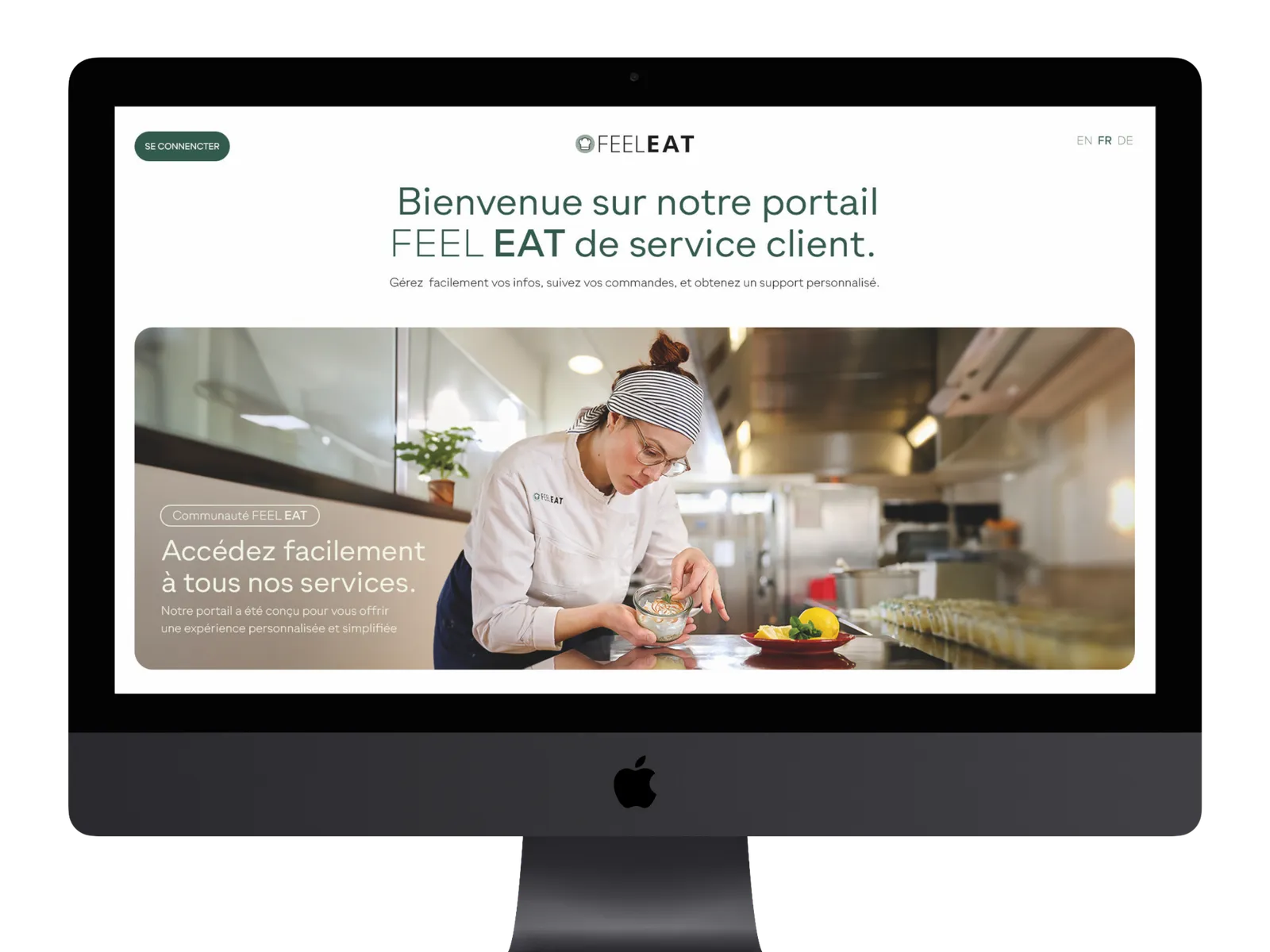
A web portal for FeelEat’s business clients, such as offices and campuses with FeelEat fridges. Each one has its own dashboard and manages its orders and subscriptions there.
Enterprise partners were managed over email threads.
FeelEat’s corporate clients include offices and campuses that run its fridges and catering. Each client was served by an account manager over email, and every order change or invoice question needed a person to answer it.
In the Smart Client Portal, each partner has a dashboard with its live consumption, orders, subscriptions and billing, read from the same data FeelEat uses. Account managers now spend their time giving advice.
Support calls dropped by 68%, and the partner NPS score went from +38 to +71.
Account managers spent their days forwarding numbers.
Partners asked for figures that already sat in FeelEat’s database, and a person had to look each one up.
Every answer had to wait for a person.
Partners named these problems when we interviewed them.
- Waiting on email: every question queued behind an account manager’s inbox.
- Spreadsheet reporting: consumption reports put together by hand and already out of date when they arrived.
- Unclear billing: partners had to open a ticket to ask about an invoice.
- Restocking by guesswork: orders placed without live consumption data.
Live dashboards replaced the emailed reports.
We gave partners direct access to the data account managers used to send them.
- Personalised dashboards: each partner’s sites and figures, updated live.
- Orders & subscriptions: changes land in FeelEat’s system instantly.
- Billing in view: partners check invoices without opening a ticket.
- Time for advice: account managers stopped copying figures into emails.
The portal reads the same data FeelEat’s own team uses.
Partners use these instead of writing to their account manager.
Partner dashboards
Consumption and spending for each site, so a partner can see where stock is running low.
Orders per site
Partners order for each site and see the status of every order.
Subscription control
Recurring services can be paused or changed by the partner.
Shared data
The same figures in FeelEat’s ERP and in every partner’s view.
Reporting & exports
Consumption and billing reports partners download themselves, ready for their finance team.
Users and sites
Admins on the partner side manage their own locations and users, and only those.
Partner interviews decided what went on each screen.
Account managers took part too, because they knew which questions came in most.
Conceptualisation
Collected the requests partners and account managers dealt with most often.
Design
Dashboards first, with the most-asked figures on the opening screen.
Development
The portal, reading orders, consumption and billing from one shared source.
Deployment
Partners were brought onto the portal one at a time.
Bring your version of the FeelEat Smart Client Portal problem. Four hours, free, with the team that shipped this one.
Book the free workshopWhat kept us up at night.
What needed care when FeelEat opened its data to clients.
Showing internal data to clients
Partner dashboards read FeelEat’s internal data directly, without a separate copy that could fall out of date.
Live consumption at reorder time
Partners now see their live consumption when they reorder, rather than last month’s spreadsheet. Restocking accuracy averages 94%.
Partner data stays separate
Each partner’s data is kept strictly separate, and each partner sets up its own users and approvals.
Tech stack.
Built with NestJS on Node.js. Data sits in MySQL, with Redis and ElasticSearch alongside.





Numbers the owners watch.
Results across FeelEat’s partner accounts.
The most common requests are now handled in the portal.
Partners and FeelEat plan from the same live numbers.
Net Promoter Score: how likely partners are to recommend FeelEat, before and after the portal.
Want numbers like these? Here is what happens after you write.
Keep exploring.
Every project here is live, paid for, and earning revenue for its owners.
Frequently asked questions
Put it in a brief. A senior engineer reads it and replies within one business day.
What is the FeelEat smart client portal?
It is a web portal for FeelEat’s business clients, built by CODT Technologies. Partners see their own dashboards, manage orders and subscriptions, and look things up themselves instead of calling support.
What results did the client portal deliver?
Support calls fell by 68%, restocking accuracy reached 94% on average, and partner satisfaction (NPS) rose from +38 to +71.
Why did partner satisfaction (NPS) nearly double?
Partners no longer had to call or email to get an answer. Live dashboards, order status and subscription settings sit in one place they can check at any time.
Have a problem worth
solving well?
Tell us about your product, your timeline and your constraints. We reply within one business day with an honest read on fit, scope and the right team.