
For most mobile apps, the programming language follows from two other choices: iPhone, Android or both, and who builds it. Pick a poor fit and the build takes longer and costs more. Below are the main app development languages in 2026, what each one is for, and when I'd steer you away from it.
Which language is used for app development?
Most native apps use Swift for iOS and Kotlin for Android. If you want one codebase for both, the usual picks are Dart with Flutter, or JavaScript/TypeScript with React Native. Kotlin Multiplatform sits in between: you share the business logic in Kotlin and keep a native UI on each platform.
| Language | Platform | Framework | Use it when | Avoid when |
|---|---|---|---|---|
| Swift | iOS and other Apple devices | SwiftUI, UIKit | The app is iPhone-first and needs new iOS features early | You need Android too and can fund only one team |
| Kotlin | Android (shared logic on iOS via KMP) | Jetpack Compose, Kotlin Multiplatform | Any new Android app, or sharing logic with a native iOS app | Your team only knows web tech and must ship both apps fast |
| Dart | Android and iOS | Flutter | One team, one codebase, a custom-designed UI | The app leans on unusual hardware or deep OS features |
| JavaScript/TypeScript | Android and iOS | React Native | Your developers already write React for the web | Nobody will own the native modules as the app grows |
| C# | Android, iOS, Windows, macOS | .NET MAUI | Your company already runs on .NET | You're starting fresh with no C# developers |
| Java | Android | Android SDK (Views) | You maintain an existing Java Android app | You're starting a new Android app |
| Objective-C | iOS | UIKit | You maintain an older iOS app | Anything new |
| Rust | Shared library on both | Called from Swift or Kotlin | A heavy core like sync, parsing or encryption | Building the screens themselves |
| Python | Android and iOS | Kivy, BeeWare | A quick prototype or internal tool by a Python team | A polished app for the public stores |
The main app development languages, one by one
1. Kotlin: Programming Language for Android App Development
JetBrains introduced the language Kotlin, and it took off after Google made it an officially supported Android language in 2017. Kotlin is one of the best app programming languages because of its simple and concise syntax. The code is shorter and simpler, so there's less room for errors and the work goes faster. Java is still widely used, but Kotlin fixes some of its weak spots, like null pointer exceptions: null safety is built into the language.
At Google I/O 2019, Google went a step further and made Android development Kotlin-first. Kotlin is also the language behind Kotlin Multiplatform, which lets an Android and an iOS app share their data handling and business logic while each keeps a fully native UI.
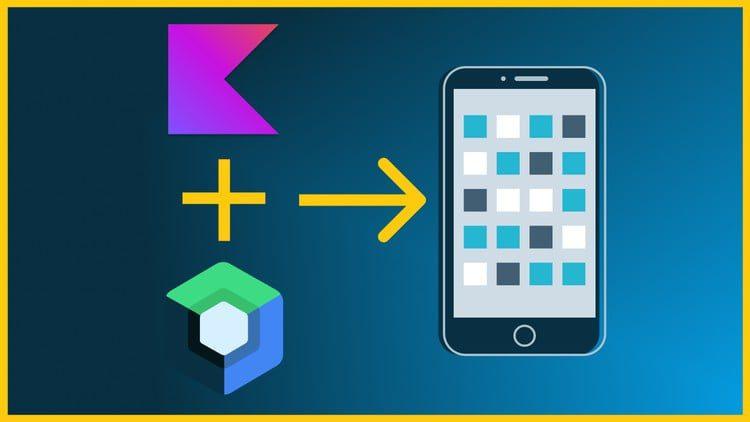
Jetpack Compose is not a separate language. It's Google's modern UI toolkit for Android, and you use it from Kotlin. You describe each screen in code (a declarative UI), so responsive layouts take less boilerplate than the old XML views.
2. Java: Popular Programming Language for Android App
Java was the main Android language for years, and plenty of older Android apps are still written in it. Java code is portable across platforms, it has a huge set of libraries, and the community is large and active. But since 2019 Google designs new Jetpack libraries, samples and docs with Kotlin users in mind, while keeping Java supported. My advice: keep Java where an app already uses it, and start new Android work in Kotlin.
3. Swift: Perfect for iOS App Development
Objective-C used to be the go-to language for iOS app development, but the modern features in Swift have won developers over. Since its launch, it has been popular for its ease of use, speed and safety. Most importantly, it's Apple's own language, so it fits closely with Apple's tools and frameworks. It's generally seen as more efficient than Objective-C, and its strict types and error handling catch many common mistakes early.
4. Objective-C: Legacy iOS Code
Objective-C was Apple's main language before Swift arrived in 2014. Today it's a maintenance language. A lot of older iOS apps and libraries are still written in it, and because Swift and Objective-C can live in the same project, teams usually move old code over piece by piece. I wouldn't start a new iOS app in it.
5. Dart (Flutter)
Flutter is a framework, not a language. The language is Dart, and both come from Google. You write the app once in Dart, and Flutter draws every part of the UI itself instead of using the phone's built-in controls. So the app looks the same on Android and iOS. Teams pick it when one codebase and a custom design matter most. When the app needs a lot of platform-specific features, you write extra native code to reach them.
6. JavaScript/TypeScript (React Native)
React Native is a framework too. You write JavaScript, or TypeScript, which new React Native projects now use by default, and React Native drives the real native components on each platform. Meta released it in 2015 and still maintains it. The big plus is people: a team that already writes React for the web can get productive on mobile quickly, and the community is large.
7. C# (.NET MAUI)
If your company already runs on Microsoft tools and C#, .NET MAUI lets you build Android, iOS, macOS and Windows apps from one C# codebase. It grew out of Xamarin, which this list used to recommend. Microsoft ended support for all Xamarin SDKs on 1 May 2024, so if you still have a Xamarin.Forms app, plan its move to .NET MAUI.
8. Rust: Potential Programming Language
Rust is known for memory safety and high performance. Developers mostly use it for system-level programming and performance-critical code. In mobile apps it usually sits underneath as a shared library, while the screens are built in Swift or Kotlin. Mozilla, for example, builds the account and sync components shared by Firefox for Android and Firefox for iOS in Rust.
9. Python (Kivy, BeeWare)
Python is a rare choice for mobile apps, but it can be done with Kivy or BeeWare. Kivy is an open source library for building cross-platform apps for both iOS and Android. BeeWare is a set of tools for writing native apps in Python, on iOS and Android among others. It suits a Python team building a prototype or an internal tool. For a polished app in the stores, I'd pick one of the options above.
If you're paying for the app, not writing it
Then the language matters less than you'd think. If your team builds native apps, they'll pick Swift for iOS and Kotlin for Android almost by default. The bigger decision is one level up: one shared codebase, or two native apps. That choice moves your budget, your timeline and who you can hire much more than the language does.
So ask your developers which framework they plan to use, and why it fits your product and your people. We compared the three main options in Flutter vs React Native vs Kotlin Multiplatform. For a first number, try the app cost calculator. The app development cost guide explains what pushes the price up or down.
Choosing the language is step zero. Our mobile team picks it with you based on your product and the people you can hire, then builds. The first workshop and a high-level estimate are free, usually back within three working days. Tell us what you're making.
FAQ
What is the best language for mobile app development?
There isn't one winner. It depends on where your users are and who builds the app. For a new iPhone app, Swift. For a new Android app, Kotlin. If one team has to ship to both stores, Flutter with Dart or React Native with TypeScript are the common choices, and that framework call matters more than the language.
Can one language build both Android and iOS apps?
Yes. Dart (with Flutter), JavaScript or TypeScript (with React Native) and C# (with .NET MAUI) all build both apps from one codebase. Kotlin can too, through Kotlin Multiplatform, though there you usually share the logic and still build each screen natively. Expect a little platform-specific code either way, for some device features.
What coding language do mobile apps use?
Native iPhone apps are written in Swift, or Objective-C in older code. Native Android apps use Kotlin or Java. Cross-platform apps add Dart, JavaScript/TypeScript or C# on top. Some apps also call libraries written in C, C++ or Rust for heavy work like video processing or encryption, shared by both versions.