
Software that keeps the kitchen moving.
Point-of-sale, self-order kiosks, kitchen displays and the back-of-house systems behind them — built to hold up at a Friday-night rush, not just a demo.
Content reviewed
The busiest night is the only test that counts.
Hospitality software earns its keep at peak, and that is exactly when most of it cracks. We engineer for the Friday-night rush from the start: kiosks and kitchen displays load-tested to your worst-case order volume, terminals that keep taking payments through a dropped connection, and a back-of-house that ties every order to an ingredient cost. We have shipped this for FeelEat at a $10M+ valuation — the floor is our spec.
Two numbers rule this business.
Hospitality software lives or dies on two numbers: orders per hour and shrinkage. A kiosk that stalls mid-rush, a kitchen display that loses a ticket, a fridge that quietly leaks margin — each one costs covers and trust in real time, on the busiest night of the week.
We have shipped the full stack for food businesses — from the FeelEat smart "Happy Fridge" with scan-to-unlock and pay-to-open, to self-order kiosks, employee apps and the ERP behind them. Offline-first, payment-ready, and tuned for the floor rather than the slide deck.
The result is a connected operation where every order ties back to an ingredient cost, every device keeps working through a dropped connection, and the people running the venue spend their night on guests instead of fighting their tools.
Systems for restaurants.
Six systems we ship again and again for food businesses, from the kiosk out front to the ERP in the back.
POS & self-order kiosks
Fast, offline-tolerant terminals and kiosks with card, wallet and QR payments — tuned for queue speed at peak.
Kitchen display & routing
Real-time KDS that splits, sequences and times tickets across stations so nothing is dropped when the floor is full.
Smart fridges & unattended retail
Scan-to-unlock, pay-to-open hardware-plus-software that turns shrinkage into attributable, 24/7 revenue.
Online ordering & loyalty
Branded web and mobile ordering with menus, modifiers, loyalty and delivery-partner hooks.
Back-of-house & inventory
Recipes, stock, suppliers and staff time unified into one ERP — costed to the ingredient.
Multi-site operations
Menus, pricing and reporting rolled up across every location from one console.
Counted on the floor.
The numbers below come from kitchens and fridges we have already shipped for. Your menu and your sites set the next targets.
Want this in your company? Here is what happens after you write.
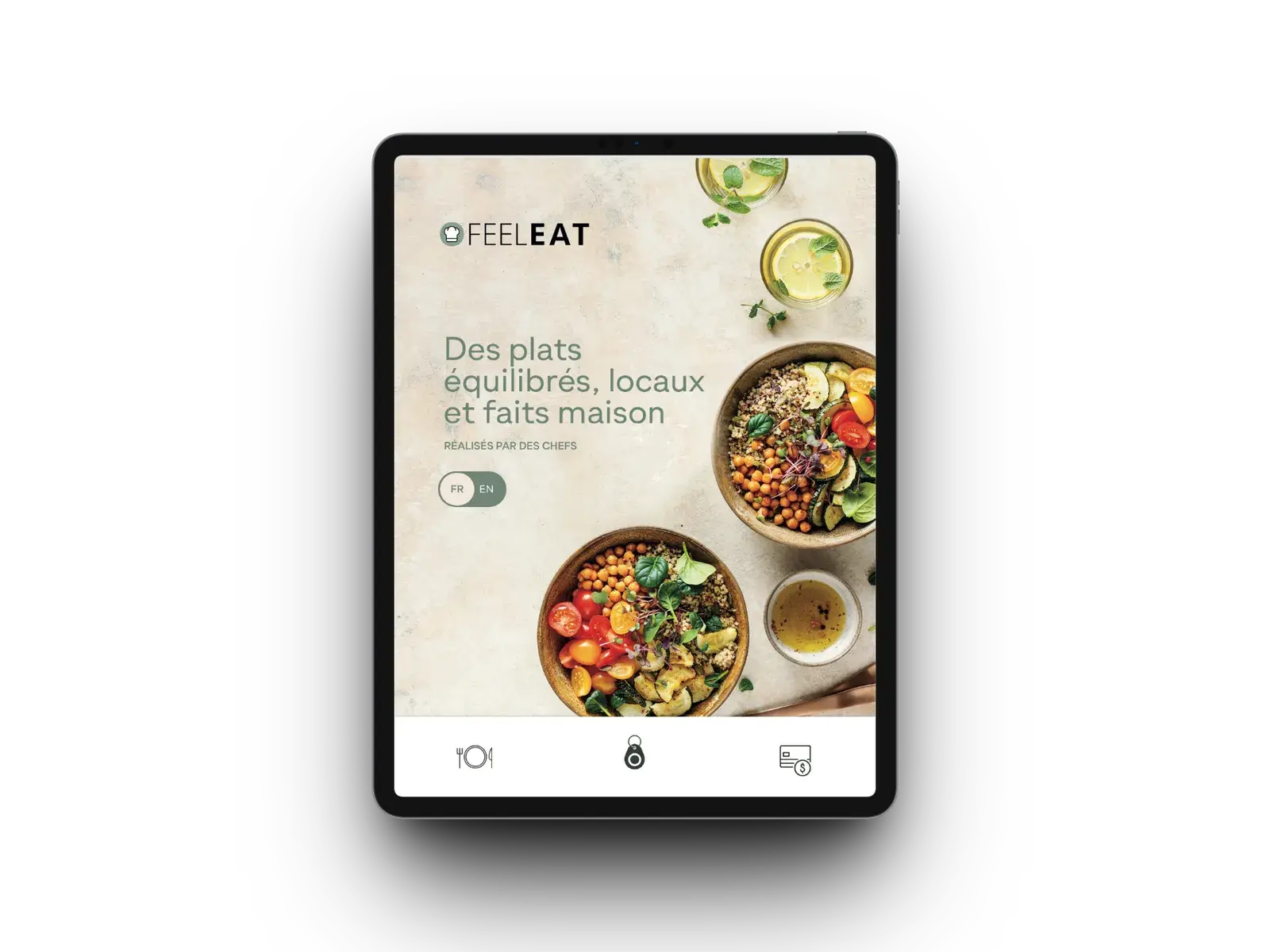
FeelEat’s self-service kiosk: guests browse chef-made meals and pay in a few taps, in workplaces and shared spaces. Built by our team for a Swiss food operator.
What peak service taught us.
Four rules we keep after years of kitchen projects — and what each one does for you during service.
Built for the rush
We load-test against your busiest hour — kiosks and KDS keep working when the floor is full.
Offline-first by default
Terminals keep taking orders and payments through a flaky connection, then reconcile when the link returns.
Hardware + software as one
Fridges, readers, printers and tablets are integrated and supported together — one team, one accountable contact.
Margin you can see
Every order ties back to ingredient cost and stock, so shrinkage and waste stop hiding in a spreadsheet.
From one venue to the whole group.
A ghost kitchen and a quick-service chain have very different problems. Here are the restaurant businesses we work with.
What the rush runs on.
These are the tools most of our restaurant builds run on. Your venues and hardware may change the list.
One crew from kiosk to ERP.
Most restaurant projects mix an ordering app, in-store hardware and an ERP link. You brief one team for all of it.
It comes up in every demo.
The questions restaurant and food-tech teams bring to a first call.
Do you integrate with our existing POS or payment provider?
Usually yes. We work with mainstream card and wallet providers and can sit alongside or replace an existing POS — we map the integration before you commit.
What happens when the internet drops mid-service?
Terminals and kiosks keep taking orders and payments offline, queue the transactions locally, and reconcile automatically the moment connectivity returns.
Can you supply the hardware too, or just the software?
Both. For unattended retail and smart fridges we integrate and support the hardware and software as one system, from one team.
How fast can a kiosk or ordering flow go live?
A focused first rollout with one venue and real payments typically lands in weeks, then expands site by site once it is proven on the floor.
Does it work across multiple locations?
Yes — menus, pricing, staff and reporting roll up across every site from one console, with per-location overrides where you need them.
Anything we missed?
Put it in a briefRunning a venue your
software can’t keep up with?
Say where service slows down: kiosks, kitchen, stock or shrinkage. You will have a senior engineer’s answer within one business day.