

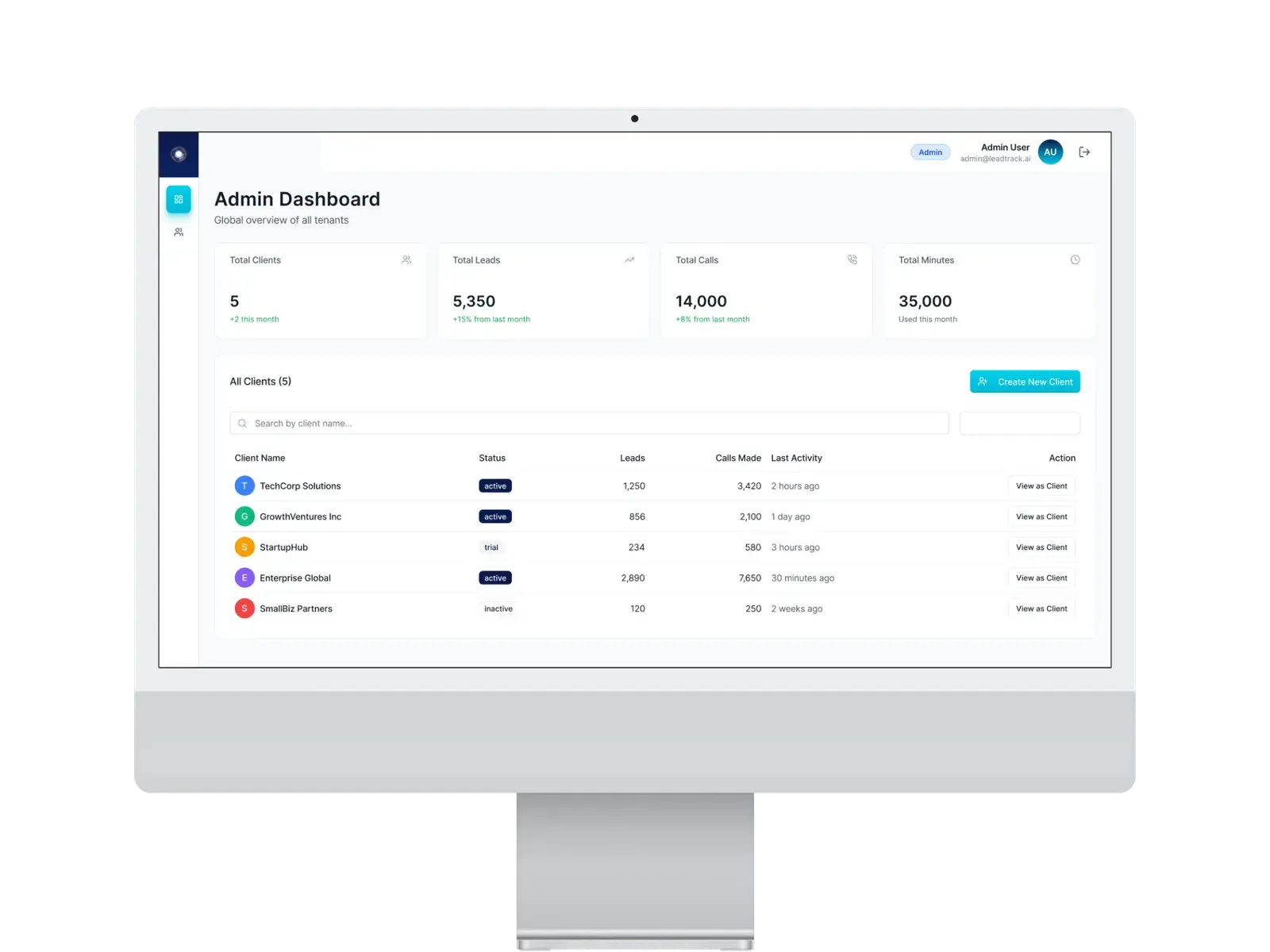
The ads find you on their own: rent an AI phone assistant, pay monthly, never miss a call again. If you run a business with a phone, you've seen them.
My advice here is awkward for my own company: renting is often right.
We build voice agents. I'd rather have a project than give good advice. But an off-the-shelf assistant is the correct answer for plenty of cases, and hiding that is selling, not advising.
This piece is the math I usually walk through out loud. What the rental assistants do well. Where their ceiling is. And what an assistant of your own costs — with the same numbers that sit on our public price list.
What the rental assistants do well
A rented AI phone assistant picks up when nobody else does. It gives out opening hours, takes messages, books appointments into a standard calendar, sends a summary by email afterwards. Setup takes days, not months. Usually cancellable monthly.
That's a lot. A missed call is often a lost customer — and against "nobody answered", any machine that picks up politely wins.
Prices sit, depending on the provider and your minutes, between a few dozen and a few hundred francs or euros a month. For a small business with a manageable call volume, that's money well spent.
If CODT Technologies were a hair salon: I would rent.
Where the ceiling is
Three things sit in the fine print, and none of them is a scandal. You should just know them going in.
The flows belong to the builder. The assistant can do what the provider's flow builder allows. Book an appointment into a standard calendar: yes. First check your inventory system for stock, then check the technicians' schedule, then commit to a date: no. The day you want your assistant to know your systems, you hit the ceiling.
The data lives with the provider. Recordings, transcripts, phone numbers — they sit in the provider's tenant, processed under their setup, in their data centres. If you take GDPR and the nDSG seriously, you still have to be able to answer the questions: where does this live? For how long? Who has access? On a rental, you answer them with the provider's contract — or not at all.
Switching costs. The phone number is portable. The trained flows, the integrations, the conversation history usually aren't. The better the assistant gets, the more expensive the goodbye. That's not an accident, that's the business model.
When owning wins
Four signals, from projects, not from theory:
- Volume. Rent scales with your minutes. An assistant of your own costs a one-time build, then operations — telephony and speech models still bill per conversation, but without a middleman's margin on top.
- Your own workflows. The moment the assistant should read and write in your systems — CRM, ERP, a calendar with your rules — you're building integrations anyway. Then the question is who owns the result.
- Data sovereignty. When you own it, you decide where recordings and transcripts live, for how long, and in which jurisdiction. We build privacy-first, with GDPR and the nDSG considered from day one — decided with you, not over your head. How hard that question gets in a regulated setting is covered in the AI phone assistant for a medical practice.
- The phone is the product. If calls carry your core business — scheduling, qualification, order intake — renting means building your company on someone else's roadmap.
Proof it holds up: LeadTrack AI
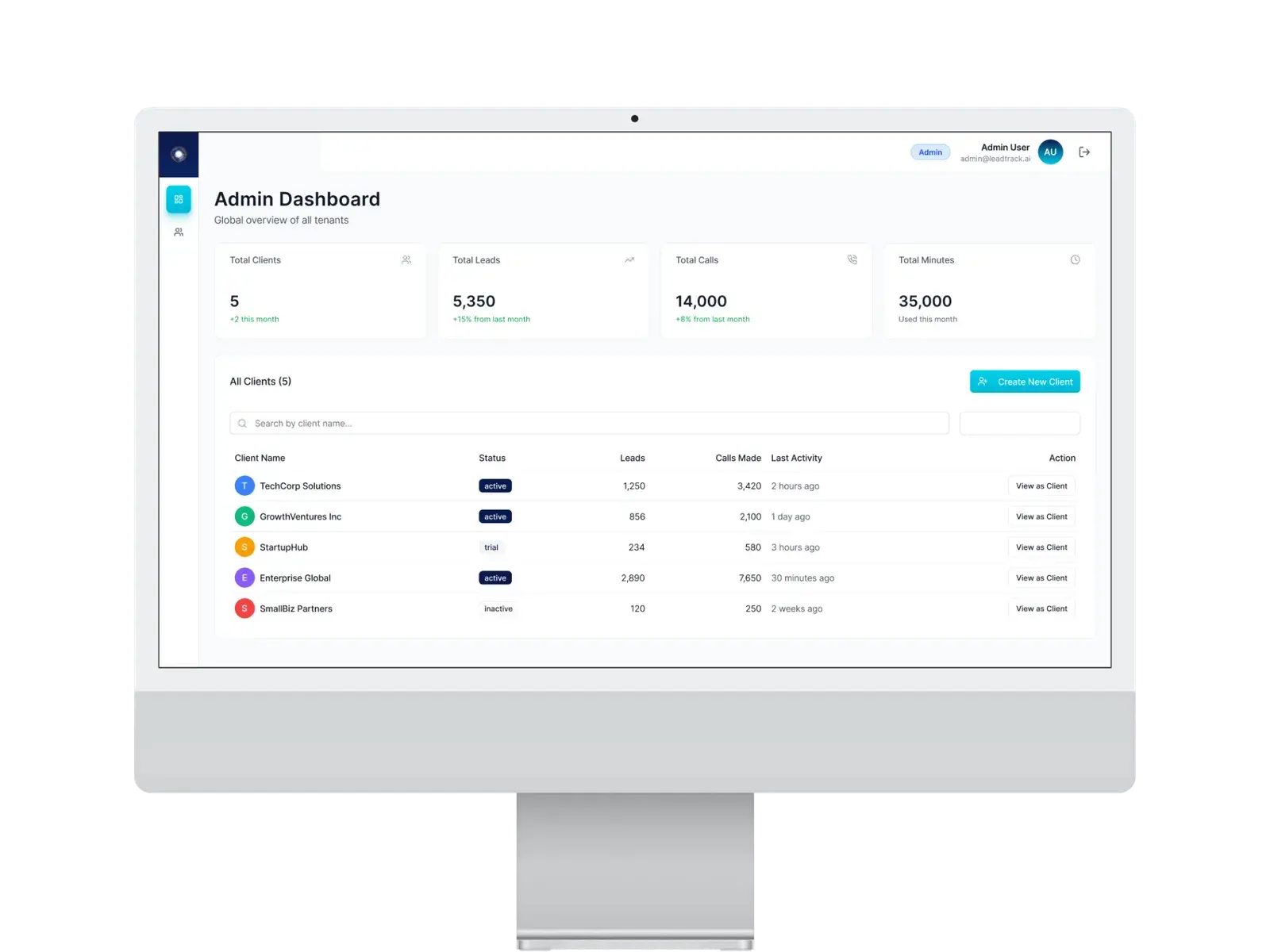
For an Australian client we built LeadTrack AI: a multi-tenant SaaS platform whose AI voice agents call and qualify inbound leads before a human takes over. The first call lands in under 30 seconds, while the lead is still at the screen. Over 100,000 calls in production, +38% conversion. The case study is in the portfolio.
LeadTrack calls out — a phone assistant answers. The stack underneath is the same: telephony, real-time speech processing, conversation logic, human handoff. If you want the outbound side in detail: the honest guide to AI cold calling.
What that project cost, we don't publish — client numbers belong to the client. What a project like that costs at our end sits on the public price list instead.
What an AI phone assistant of your own costs
From our price list, unchanged:
| Project shape | Team | Duration | Indicative band |
|---|---|---|---|
| AI voice agent, v1 — telephony, qualification, human handoff | AI engineer + backend | 10–20 weeks | $25,000–60,000 |
Version 1 means: telephony connected, conversation logic for your workflows, human handoff, first integrations into your systems. Not a lab prototype — an assistant that takes real calls.
Why US dollars? Because an exchange rate I fixed months ago lies. Swiss clients get their quote in francs, from the same price list. For the CHF framing: our Swiss cost guide.
And as always: Indicative 2026 bands, not a quote. What moves the number is complexity — integrations, compliance, data migration and the reliability bar you need on day one. Every engagement is priced fixed and in writing after a paid discovery sprint, and the sprint is credited in full against the build.
That includes being honest about the second bill, operations:
- Telephony minutes, speech-to-text, the language model and text-to-speech bill per conversation — with every provider, owned builds included. Just at cost price.
- Cloud and licence fees — billed by AWS, Azure or GCP directly, or passed through at cost with the invoice attached. No margin is added.
- Annual support typically runs at 15–20% of the original build cost.
Run that against your rent, honestly: at small volume, renting wins, over years, clearly. Owning doesn't win on the subscription price. Owning wins on what the rental can't do — your workflows, your data, your product.
The short version for deciding
| Rent when… | Own when… |
|---|---|
| standard flows are enough: answer, inform, book, take a message | the assistant should read and write in your systems |
| call volume is manageable | the per-minute bill drives the budget |
| you first want to test whether your callers accept a machine | calls carry your core business |
| nobody in-house can shepherd an IT project | data residency and jurisdiction have to be your decision |
And whether you rent or build, two things I would never skip: transparency towards callers that a machine is speaking, with recording handled cleanly — and a human handoff that actually works. An assistant that can't let go costs you customers.
The sober way in
If you're seriously weighing a build of your own: the first workshop and a rough assessment cost nothing and usually come back within three working days. After that you'll know whether the math turns for your volume — or whether I'll tell you, once more, to rent.
And how AI is changing not just phone assistants but app development itself is covered here.