

"Getting an app built with AI" — two years ago you hardly saw that search. Now founders and managing directors ask it constantly, and they mean two different things by it: should AI help with the building, so it gets faster and cheaper? Or should AI go into the product, so the app can do something that wasn't possible before?
We've been building software since 2017, and AI is currently changing both sides of that question — just not the way the ads promise. Let's sort it out.
Software development with AI: what genuinely gets faster
Our developers work with AI tools every day. Not because it sounds good in a pitch, but because certain work is measurably faster with them:
- First drafts. A screen, an API endpoint, a data model — a first version is ready in minutes instead of hours.
- Tests. Writing test cases was always the work that got cut first under deadline pressure. Now the AI writes them as it goes, and the developer checks them.
- Boilerplate, migrations, translations. The kind of work where humans make slips and machines don't get tired.
- Reading unfamiliar code. Understanding a codebase that has grown over years before you touch it — what used to take weeks now takes days.
How much faster overall? Honestly: it varies a lot by task — and anyone promising you "10× cheaper" should first be able to show you an app of theirs running in production. The gain is real, but it doesn't land as a discount on the invoice. More on that below.
What AI changes in app development — and what stays human
What AI changes in app development in 2026 comes down to three things: first drafts, tests and boilerplate now take minutes instead of hours; review by experienced developers becomes more important, not less; and the price bands stay stable — you get more quality for the same budget.
| Faster now | Still human |
|---|---|
| First code drafts | Deciding what gets built |
| Tests and boilerplate | Architecture and the data model |
| Translations, documentation | Integrating with established systems — ERP, accounting, legacy data |
| Reading and explaining code | Owning the release |
The bottleneck in software projects was never the typing. The expensive mistakes happen before the first line of code: wrong assumptions, missing edge cases, underestimated interfaces. AI makes the typing cheaper — not the decisions.
And one thing becomes more important: review. Generated code looks convincing even when it's wrong: it compiles, the tests pass, and the bug sits in the business logic. So no generated line reaches production here unread. That claws back part of the speed gain. We pay it gladly.
The new trap: the "generated app"
There are now offers to have entire apps "generated by AI" — at a fraction of the usual price. Whether you have the app built with ChatGPT or use a generator service: the demo in the first meeting works. The problem comes afterwards. A demo is not an app in production. The difference is error handling, user permissions, data protection, updates — and the one edge case real users find on day two. If nobody on the team understands the generated code by then, you pay the savings back twice over.
Three questions separate reputable providers from the trap:
- Who reviews the generated code — and still understands it a year from now?
- Is something comparable running in production? References with real users, not screenshots.
- What happens after launch? Who patches, who's liable, who keeps the app running on the next OS release?
So this doesn't come across wrong: if all you need is a click-through demo to test an idea on investors, take the cheap offer. Seriously. That's against my own business: for a throwaway prototype, our process would be too expensive too. The trap only starts when the demo quietly becomes your product.
AI inside the app itself
The second reading of "with AI" is the more interesting one: AI as part of the product. Two examples from our portfolio, both in production:
- LeadTrack AI — AI voice agents that call prospects back in under 30 seconds and qualify them: over 100,000 calls, +38% conversion.
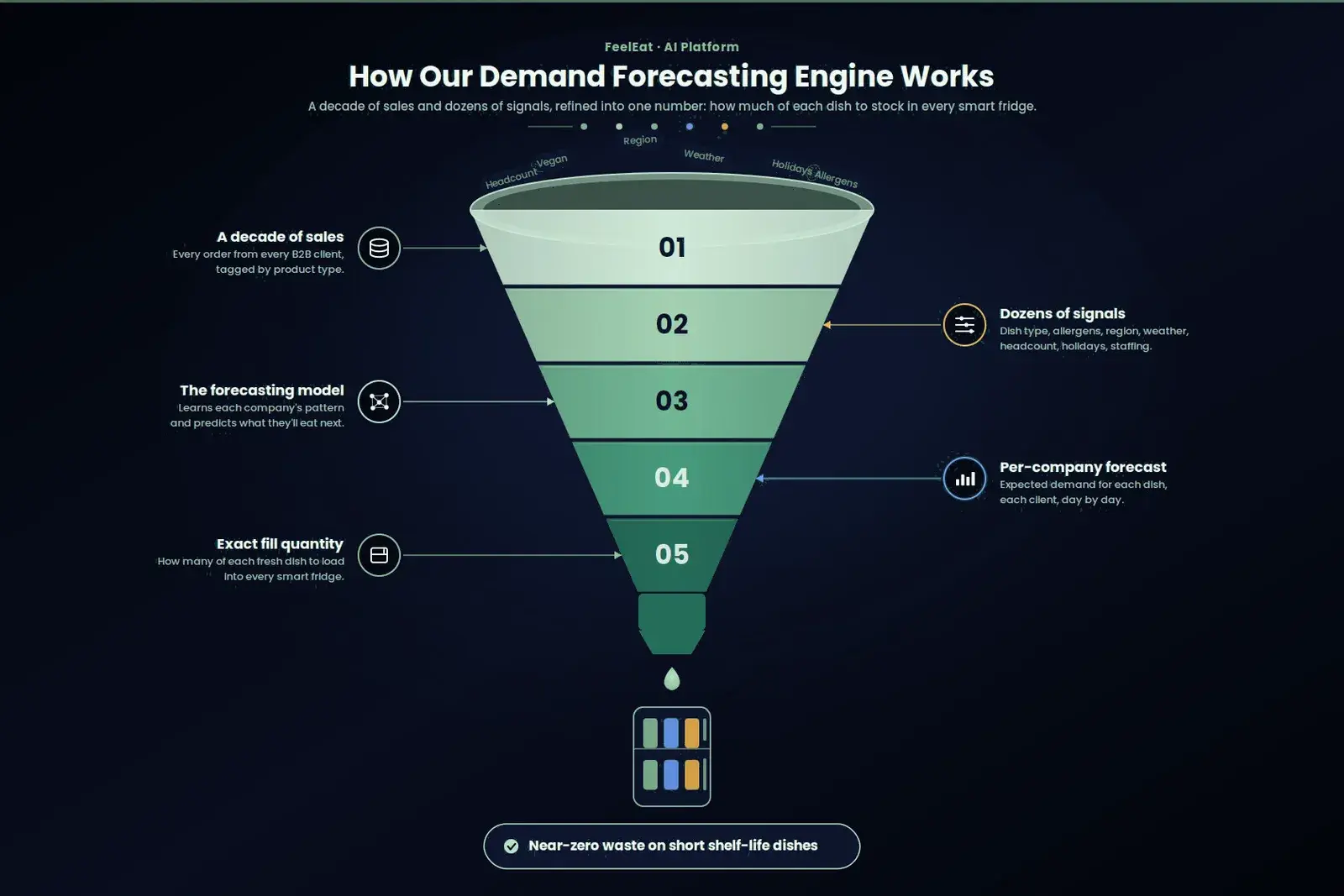
- Forecasting Model — demand forecasting at 98% accuracy, −58% stockouts for the client.
The order matters: in both cases, a business problem with a number on it came first; the AI came in as the tool. Whether owning a voice agent beats renting one — we've run the numbers here; and what agents can take over elsewhere in a company is a practice of its own for us.
What this means for your budget
So is it cheaper now? No. The price bands don't collapse. From our public price list, unchanged: a lean MVP — one core journey, 2–3 engineers, 8–14 weeks — sits in an indicative band of $30,000–55,000; the fixed number comes out of a paid discovery sprint. What AI changes is what you get inside the band: more tested edge cases, cleaner translations, more polish: work that used to fall by the wayside for lack of time. Software development with AI doesn't move the band — it moves what's in it.
Where the cost of entry genuinely drops: the first version. What an MVP is and which shortcuts backfire is here; for the Swiss context there's our cost guide, and the cost calculator works through your specific project in two minutes.
If you want an app built — with AI in the process and, where it serves the product, AI in the product — that's the work we do at CODT Technologies every day. Tell us what you have in mind: you'll get an assessment you can plan with — even if it says: don't build yet. The first workshop and a first ballpark are free, usually back within three working days.