
FeelEat sells fresh meals from unstaffed fridges, around the clock.
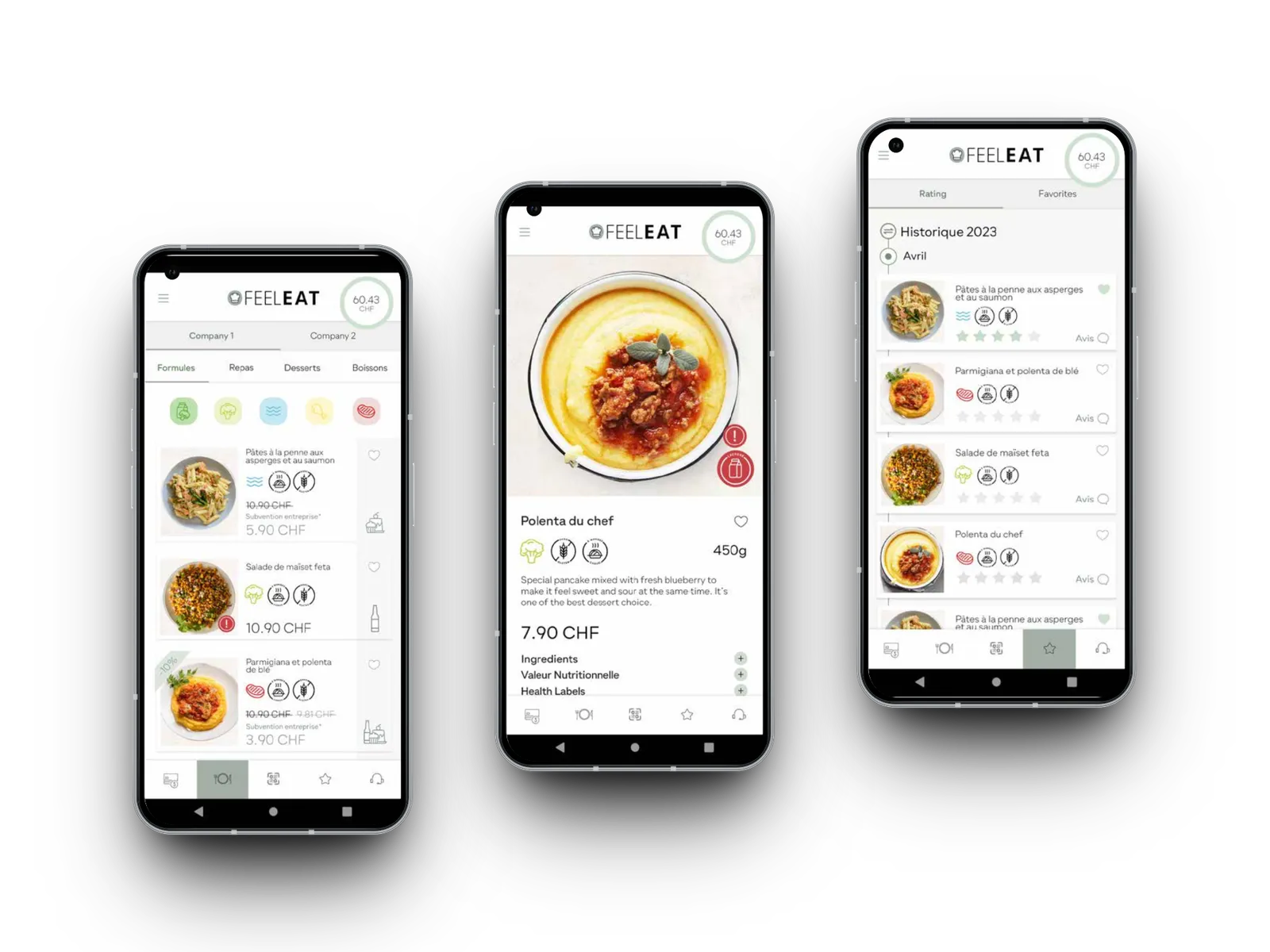
FeelEat’s Happy Fridge pairs sustainable, locally sourced meals with connected fridges and a mobile app. You browse the menu, scan to unlock, pay in the app and see exactly what is in every dish.
The fridges had to take payment by themselves.
FeelEat is a Swiss foodtech operator. Its homemade, locally sourced meals come in glass containers and wait in a connected fridge at your workplace. You skip the canteen queue, open the door and take your lunch.
For that to work, the fridge has to know who opened it and what they took, then charge them, at any hour and with nobody on site. FeelEat also wanted to keep theft down, which is where most honour-system fridges lose their money.
We built the fridge software, the app and the back office. Customers scan to unlock and pay in the app, and the fridge tracks what leaves the shelf. Each dish in the app lists its nutrition, allergens and ingredient origins.
FeelEat now runs its working day on the platform. Menus go live each morning, each fridge reports its stock and temperature, and restocking follows what is selling.
Nobody on site to fix a mistake.
An unstaffed fridge has two numbers to watch: how much stock walks out unpaid, and how often the door stays shut for someone who wants to pay.
Honour-system fridges lose money.
Fresh-meal fridges in offices usually run on trust: take a meal, pay later. With no cashier or terminal, most operators either accept the losses or stop selling fresh food.
- No checkout: the fridge has to identify the buyer and take the payment itself.
- Daily stock losses: honour-system fridges lose stock every day, and fresh food has thin margins to begin with.
- Vending machines don’t fit: off-the-shelf machines can’t handle daily menus, allergens or special diets.
- Overnight failures: if a fridge breaks down at night and nobody is told, the whole site’s stock spoils.
The fridge handles the sale itself.
Each door opening is tied to a known customer.
- Scan-to-unlock sessions: the door opens after a scan, and each opening belongs to one user with a payment method.
- Charge on door close: customers pay for what they took, with no checkout step.
- Live stock and temperature: every fridge sends its readings to the operations team as they change.
- Dish details: updated every morning with the new menu.
The app and the fridge share one platform.
These are the parts that let a fridge sell with no staff.
Scan-to-unlock access
QR and in-app unlocking with a session for each user, so the fridge knows who is shopping.
In-app payments
Two taps in the app, and the payment goes through by itself when the door closes.
Live stock data
Each fridge reports its stock as it changes. Restocking and demand planning work from those numbers.
Daily menu and dish details
The day’s menu, with the details of each dish shown before you buy.
Diet filters
Each user’s preferences and restrictions filter the menu at any fridge they use.
Remote fridge monitoring
Temperature alerts for every fridge, and software updates sent to all of them from one place.
The door lock was the first problem we solved.
Payments and menus depend on the fridge knowing who opened it, so that work came later.
Lock and payment rules
Fridge lock hardware, one session per user, and the rules for charging when the door closes.
Screen design
The scan-to-unlock flow, a menu built around the dish details, and dashboards for the operations team.
Building the apps
iOS and Android apps (native WebView shells at launch, rebuilt in Flutter from 2023), plus the backend, payments and fridge data.
Installing fridges
Fridges installed at one site after another, with remote updates and round-the-clock monitoring. We have kept shipping releases for 9+ years.
Bring your version of the FeelEat Happy Fridge problem. Four hours, free, with the team that shipped this one.
Book the free workshopWhat kept us up at night.
What had to work before the model could make money.
Charging the right person
The fridge has to know who opened the door and what left the shelf. Each user gets a session that is settled when the door closes, so charges happen automatically and are hard to dispute. Theft fell by about 90%.
Finding faults before food spoils
A fridge full of fresh food that breaks down unnoticed means throwing the food away. The team gets temperature alerts and health checks from every fridge and can push software fixes remotely, so many problems are solved without a site visit.
Getting the menu right every day
FeelEat promises you can see what is in every dish, and the menu changes daily. Each morning the dish details go straight from the kitchen’s own data to the app.
Tech stack.
The apps are written in Flutter, and the backend uses NestJS on Node.js, MySQL and Redis.




Numbers the owners watch.
Where the Happy Fridge model stands today.
Across the iOS and Android apps.
The fridge model is the core of a business now valued at over $10M.
Locked doors and automatic charging cut theft sharply compared with honour-system fridges.
Want numbers like these? Here is what happens after you write.
We started FeelEat in 2017 with a single connected fridge, and CODT Technologies has built our software ever since. What I value most is that I never have to explain our business twice. When we bring them a new problem, they already know how the fridges, the kitchen and our customers fit together.

The same team has built nine products for FeelEat and HappyBee.
The Happy Fridge came first. The others, including the app for FeelEat’s sister brand HappyBee, followed over 9+ years, all on the same architecture.
Keep exploring.
Every project here is live, paid for, and earning revenue for its owners.
Frequently asked questions
Put it in a brief. A senior engineer reads it and replies within one business day.
Who built the FeelEat Happy Fridge platform?
CODT Technologies built the whole system: the connected fridges, the scan-to-unlock flow, in-app payment, live stock tracking and the menu. The same team has shipped every release since, for more than 9 years.
How do FeelEat's smart fridges prevent theft?
Each customer scans to unlock the door, so the fridge knows who opened it, and the charge runs when the door closes. Theft dropped by roughly 90% compared with honour-system fridges, and the fridges can stay open 24/7 with no staff.
What results has Happy Fridge achieved?
More than 40,000 app downloads, a business valued at over $10M, and about 90% less theft than honour-system fridges. The fridges sell around the clock with nobody on site.
Have a problem worth
solving well?
Tell us about your product, your timeline and your constraints. We reply within one business day with an honest read on fit, scope and the right team.