
08:02
Good morning, HenryIN
Works without internet.
TapTime records a clock-in on the device even without an internet connection. Nothing is lost when the kitchen's Wi-Fi drops.
A clock-in app for FeelEat’s hourly staff across several sites. Staff hold an NFC badge to a kiosk on the wall (a QR code or biometric check where a site needs it), managers and HR see attendance in real time, and every entry is kept in a history that is hard to fake.
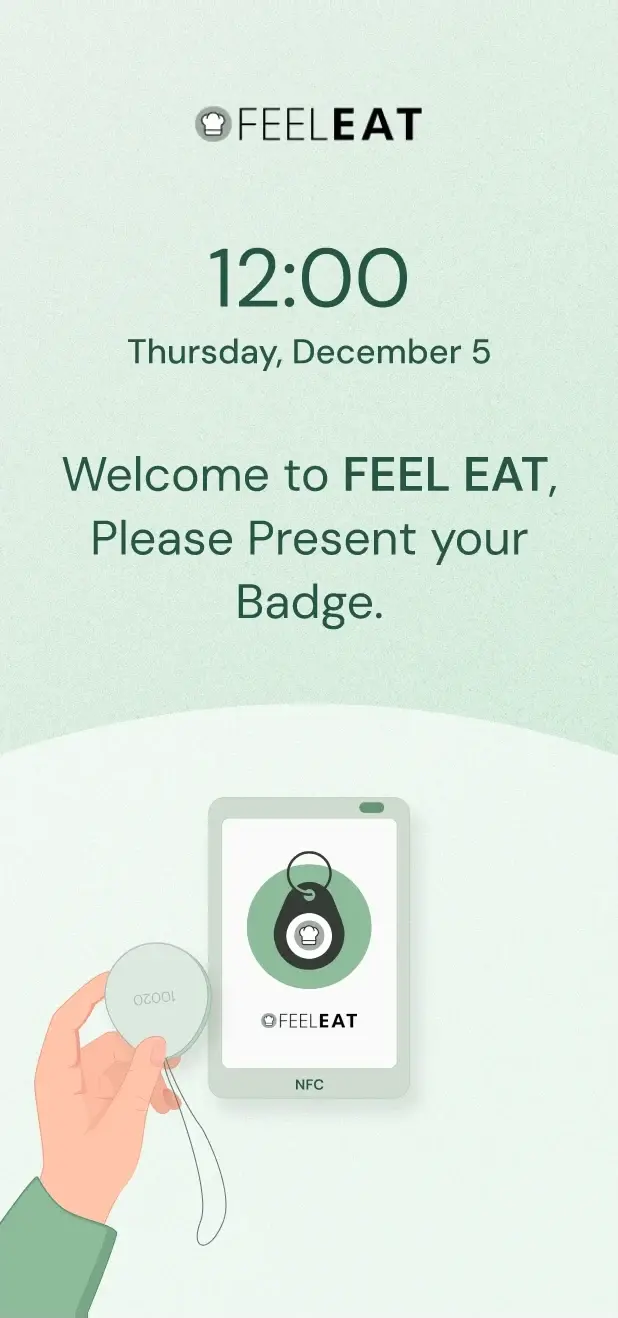
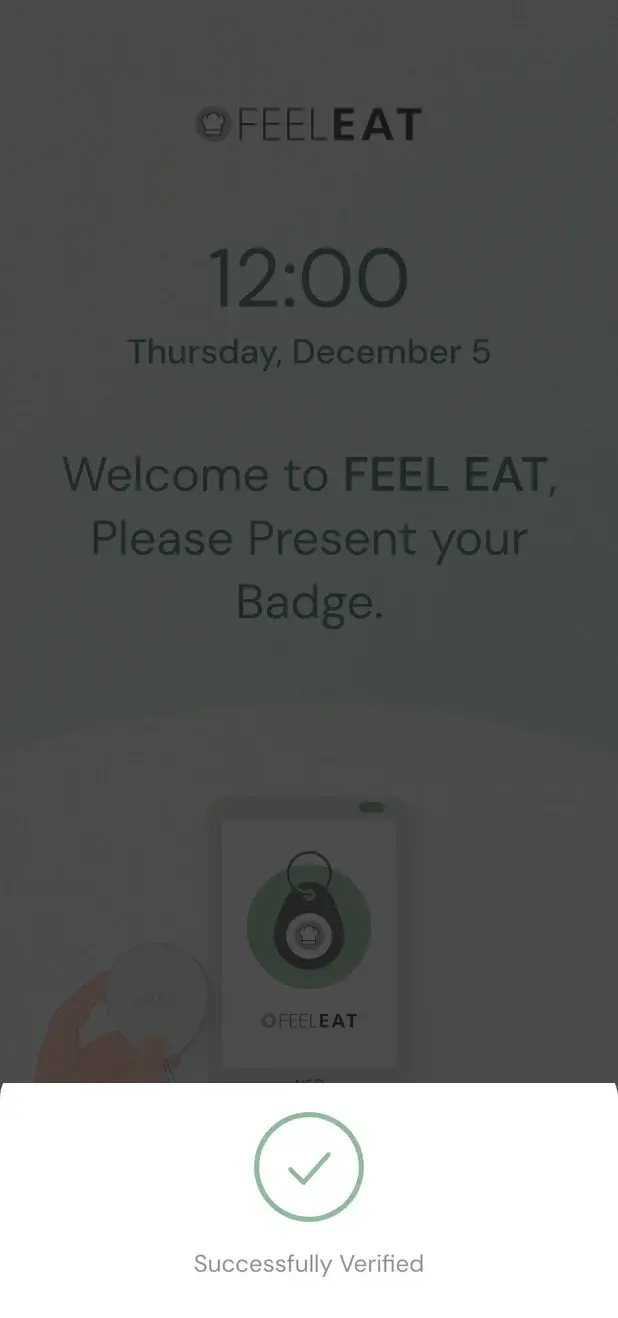
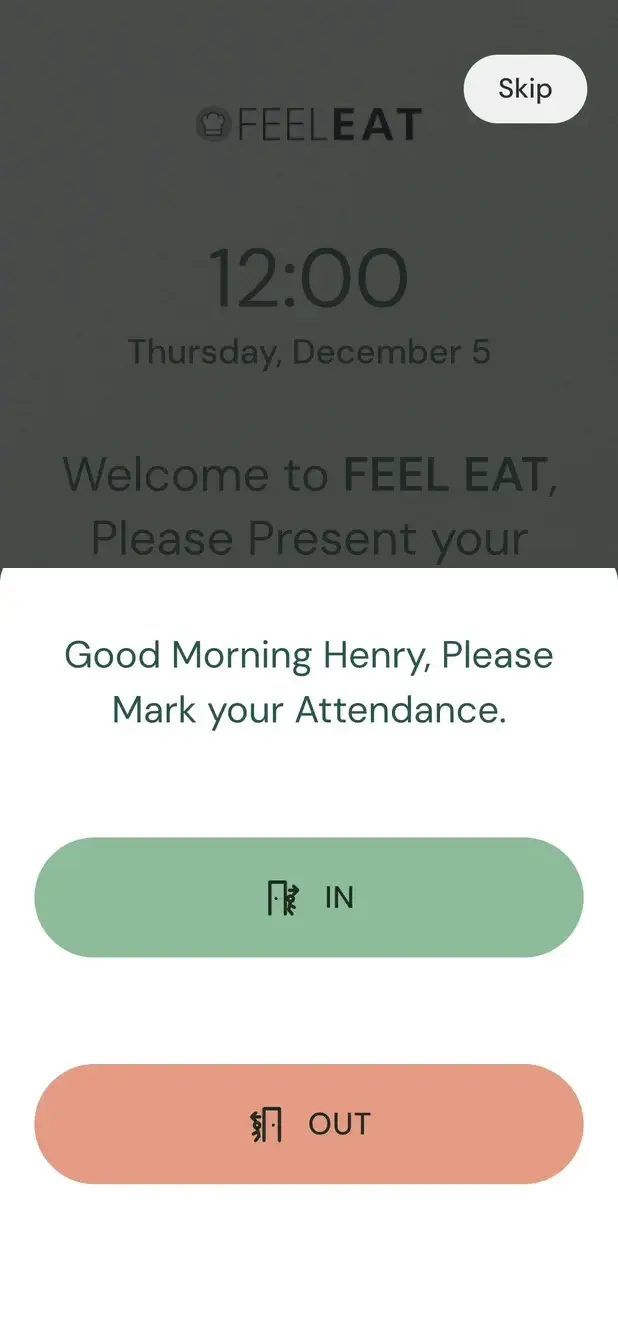
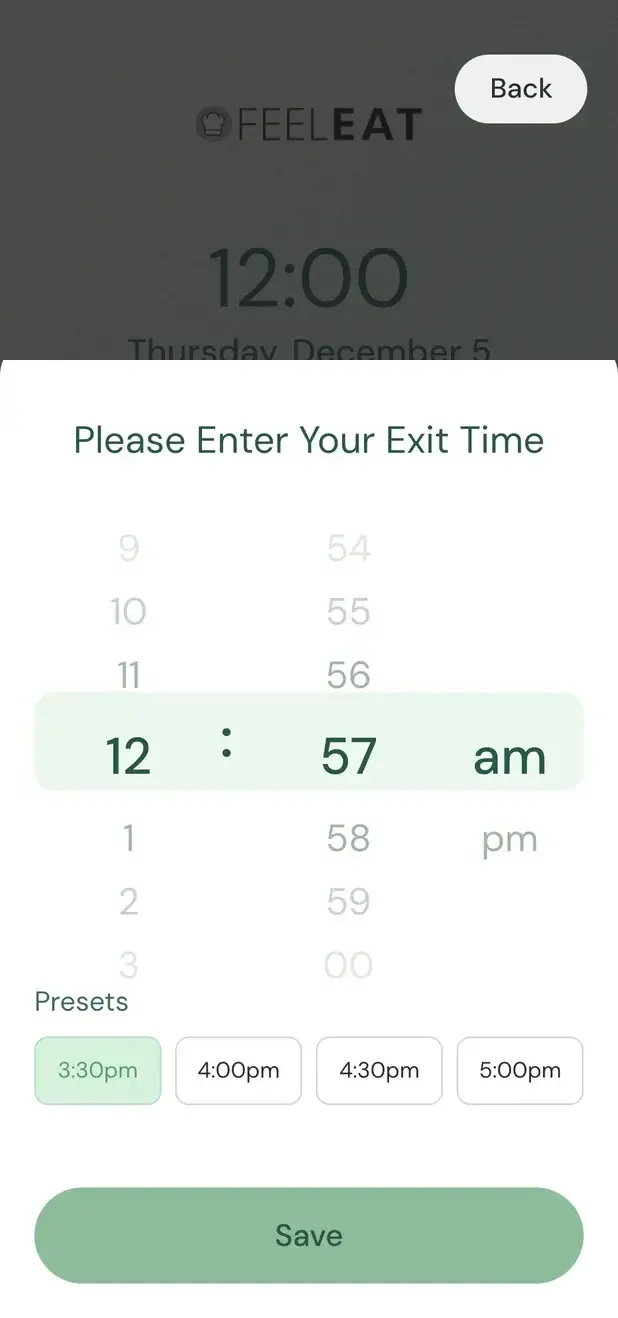
Each row shows the real screens in the order a person meets them: clocking in with an NFC badge, fixing a missed clock-out, and giving a new colleague a badge.
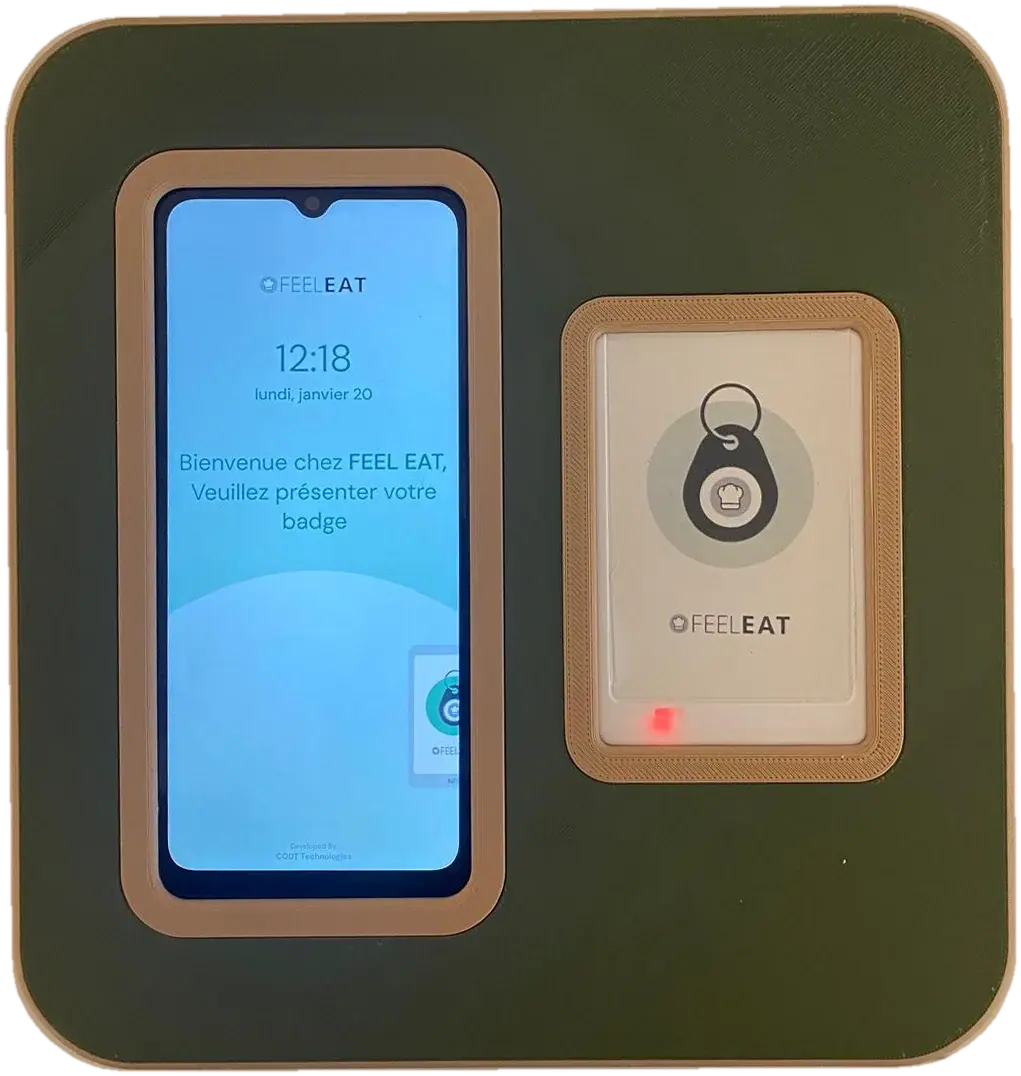
An employee holds an NFC badge to the kiosk's reader. The kiosk checks the badge, asks IN or OUT, and records the time on the device.
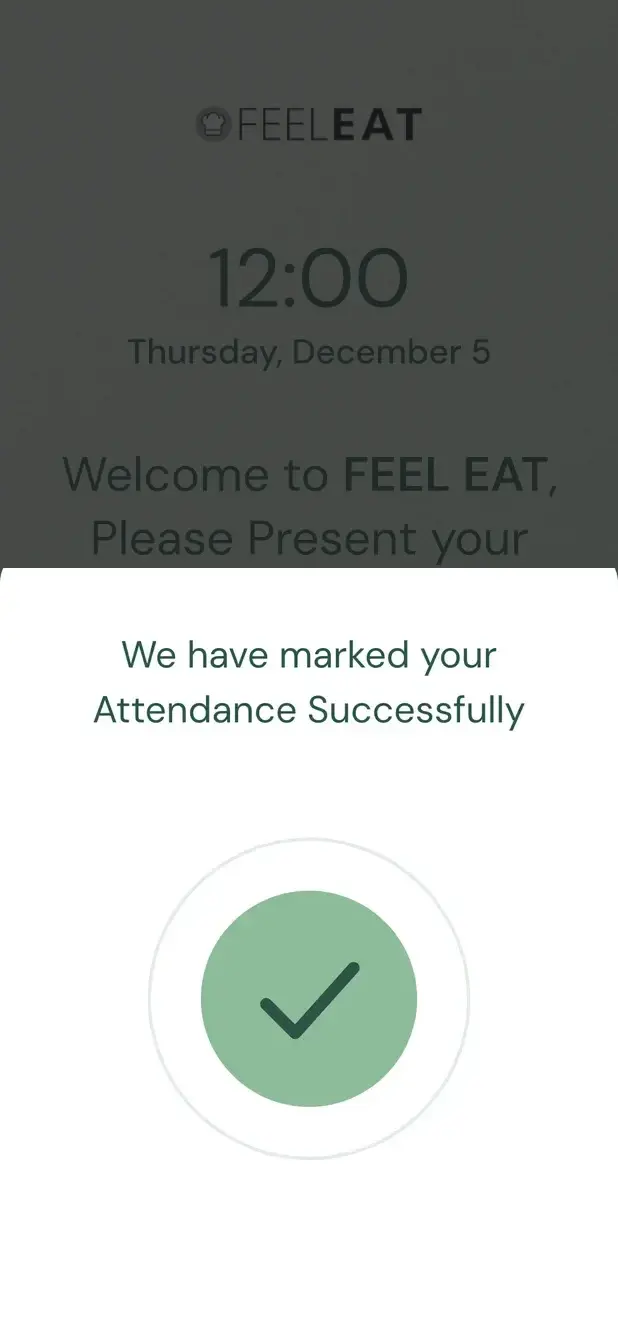
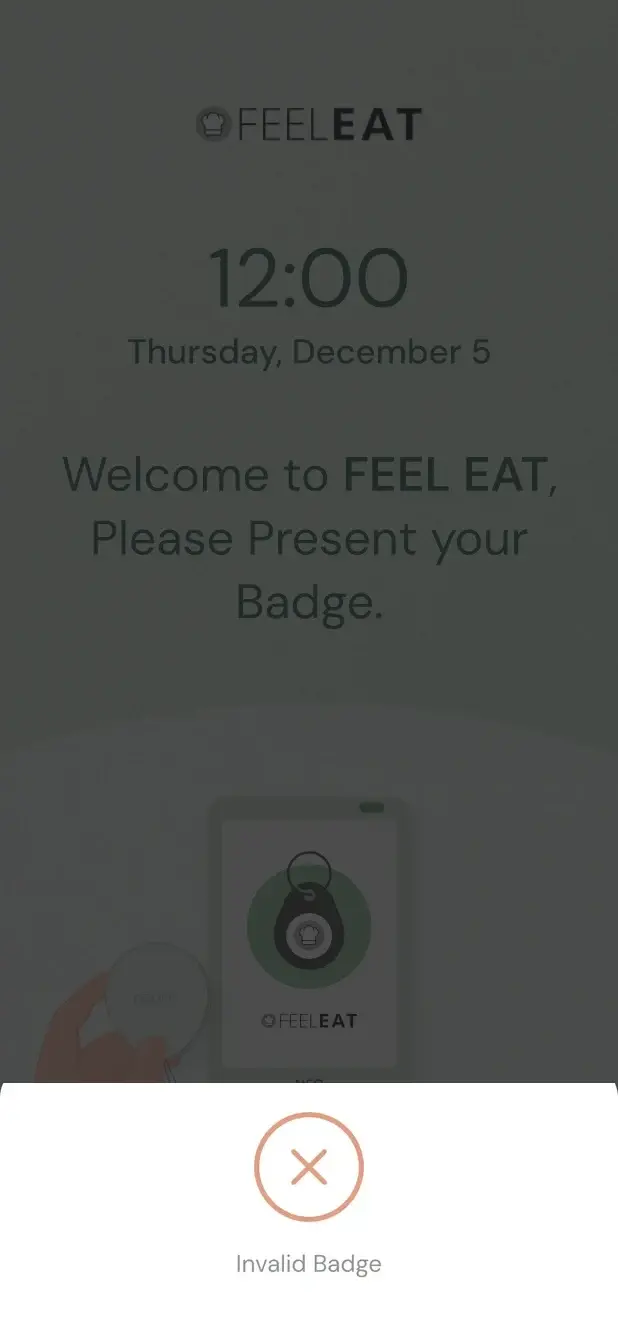
If someone left without tapping OUT, the kiosk notices at the next badge tap. It asks for the exit time, saves it and sends it to the admin. A manager approves the time before any hours change.
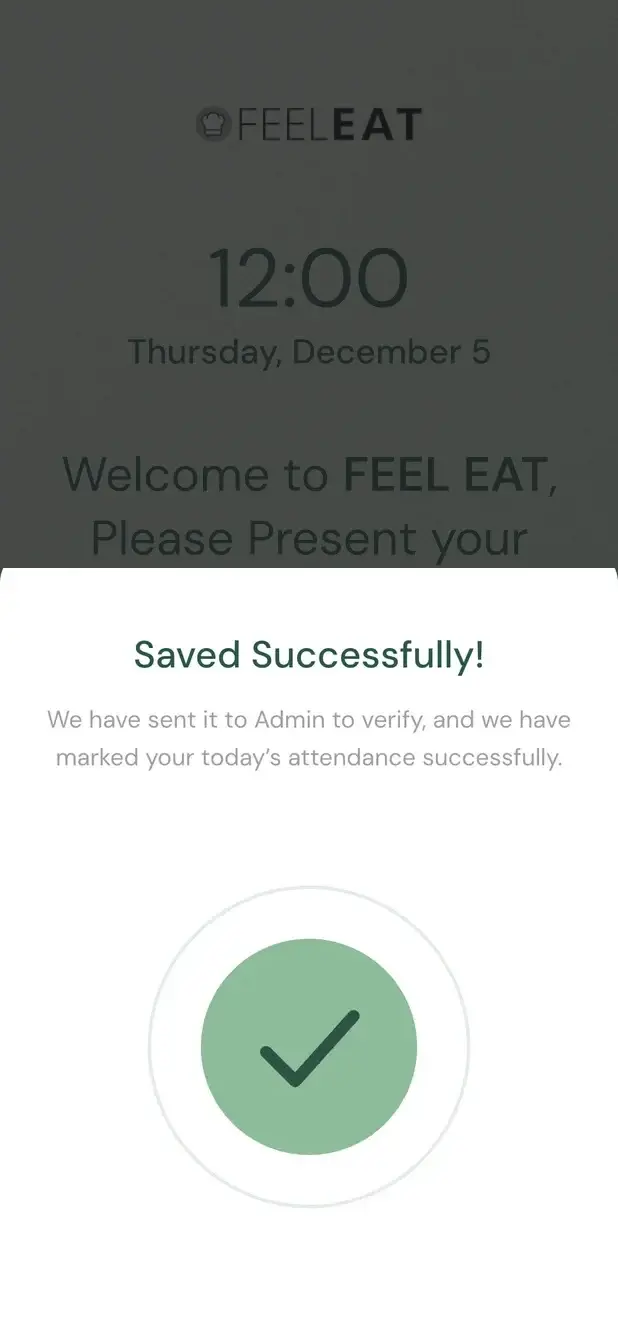
A manager approves
A manager checks the time and approves it. Nobody's hours change without a person saying yes.
A new colleague gets a badge at the kiosk itself. The admin picks the person in the user list and holds the new badge to the reader. From then on, that badge is tied to that person.
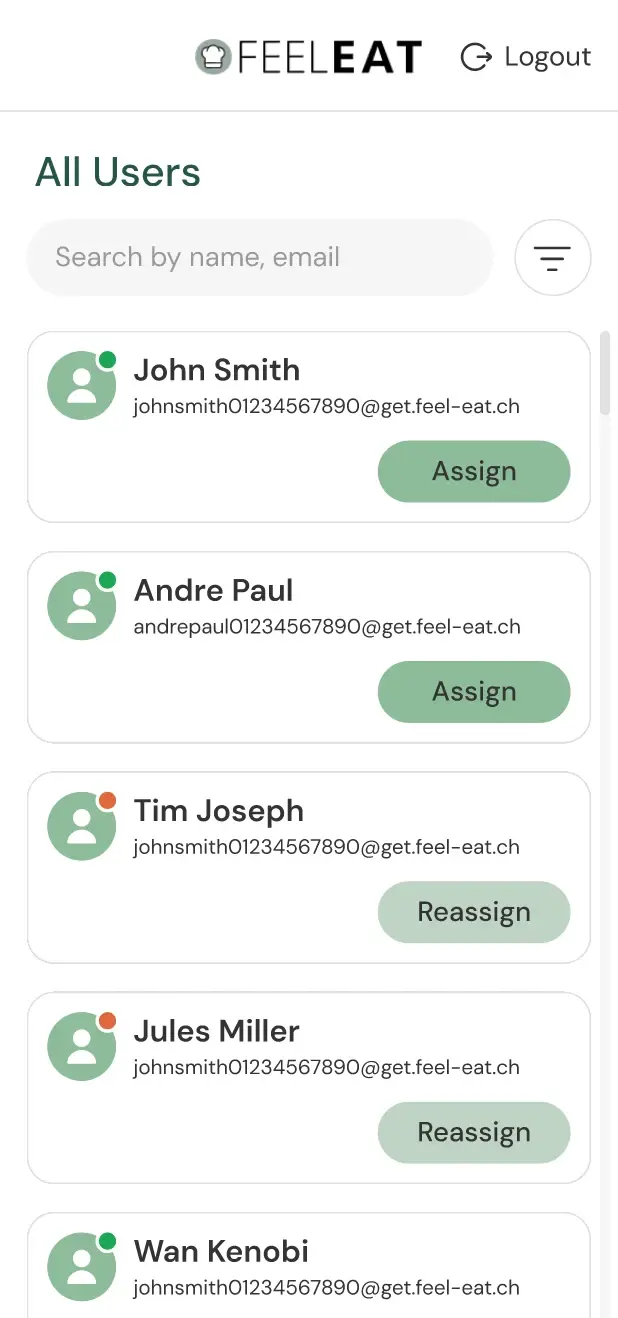
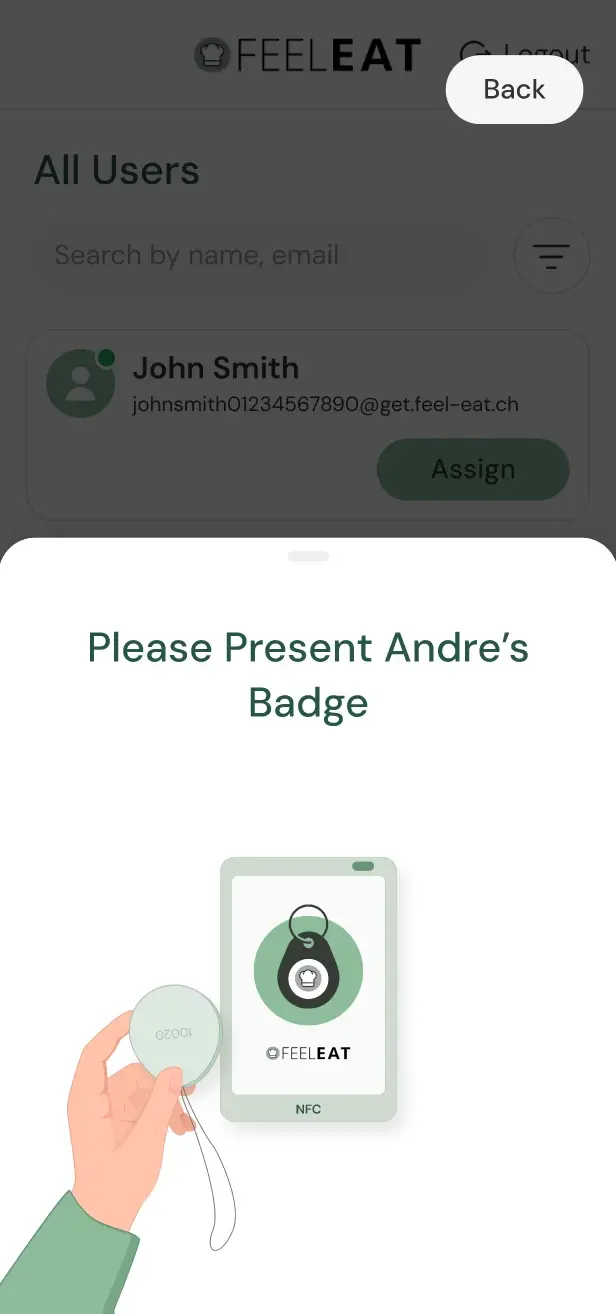
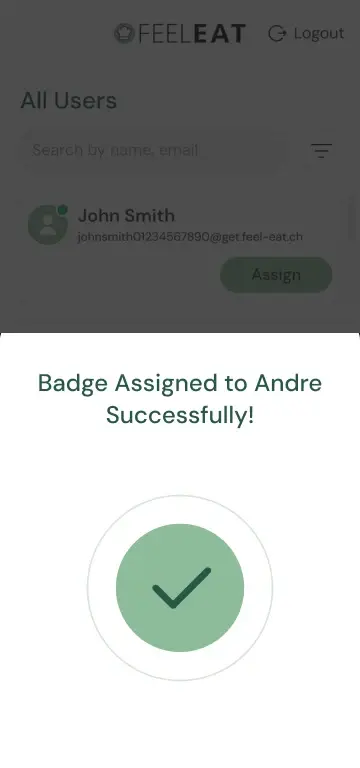
The screens are the app's design frames, shown whole. The names and times on them are sample data.
Three things the kiosk does that paper and most clock-in apps do not.
TapTime records a clock-in on the device even without an internet connection. Nothing is lost when the kitchen's Wi-Fi drops.
When the internet returns, TapTime sends the waiting records to FeelEat's ERP by itself. Nobody has to re-enter or re-send anything.
With several sites, a person can clock IN at one kiosk and OUT at another. The record follows the person, not the kiosk, so the day's hours stay in one place.
Hourly staff across FeelEat’s sites were clocking in on paper or from memory. Colleagues clocked in for each other, times were rounded up, and numbers were copied wrongly.
With TapTime, staff clock in at the site itself, and each verified clock-in goes straight to the ERP that runs payroll. Managers see who is on shift in real time, and employees can check their own history.
Attendance accuracy is now 99.5%, and payroll preparation is about 80% faster.
If a worker disputed their pay, there was only a paper sheet or someone’s memory to go on.
Each site relied on paper and goodwill.
The ERP receives the hours together with the proof behind them.
Each part below closes a gap that paper left open.
A tap on a tag fixed at the site, which ties the clock-in to the place as well as the phone.
For sites where an NFC tag doesn’t suit, a camera scan or biometric check writes the same record.
Managers can see at any moment who has clocked in at each location.
Every event has a timestamp and can’t be changed afterwards.
Verified hours go straight to payroll, with no retyping.
Each phone is tied to one person and each clock-in is verified, which makes clocking in for a colleague very hard.
For every trick on that list, the app needed a check that adds almost no time.
Checked the physical limits of each type of site.
A clock-in screen with as few steps as possible.
Mobile apps with all three check-in methods, synced live to the ERP.
Went live across FeelEat’s sites, feeding the ERP that already ran payroll.
Bring your version of the FeelEat TapTime problem. Four hours, free, with the team that shipped this one.
Book the free workshopIt had to be quicker than paper for staff and easy for HR to check.
A slow check-in pushes people to work around it. The verified tap takes about a second, so staff have no reason to skip it.
Sites differ in layout and equipment, so each one uses the method that works there. All three methods write the same kind of record.
Every clock-in stores its evidence: method, device, location and time. When someone questions their hours, HR looks it up.
Phones run the Android app. The server is NestJS on Node.js, with PostgreSQL as the database and Redis alongside.




Since TapTime replaced paper timesheets.
| What we measure | Figure |
|---|---|
| Attendance accuracyClock-ins that match who was actually on site. | 99.5% |
| Faster payrollLess time spent preparing each payroll run. | ~80% |
| Less buddy-punchingFar fewer cases of one person clocking in for another. | ~95% |
Hours are recorded where the work happens, and a manager signs off every correction, so payroll runs on figures nobody has to argue about.
Want numbers like these? Here is what happens after you write.
Every project here is live, paid for, and earning revenue for its owners.
Put it in a brief. A senior engineer reads it and replies within one business day.
TapTime is a clock-in app that CODT Technologies built for FeelEat, a Swiss food company with kitchens and sites in several places. It is for hourly staff who need to record attendance in seconds, and for the managers and HR team who need those hours to be right for payroll.
Clocking in works with an NFC badge. The employee holds the badge to the reader on the kiosk, the kiosk verifies it and asks IN or OUT, and the time is recorded. Each badge is tied to one person, and each record keeps the time, the site and the method used.
Yes, TapTime works without internet. A clock-in is recorded on the kiosk device itself, so a badge tap counts even when the kitchen's connection is down. When the internet is back, the waiting records are sent to FeelEat's ERP automatically, without anyone re-entering them.
Yes. With several sites, a person can clock IN at the kiosk of one site and OUT at the kiosk of another. The record follows the person, not the kiosk, so the day's hours are kept together as one record for payroll, whichever kiosks were used.
When someone forgets to clock out, the kiosk notices at the next badge tap and asks for the exit time. The employee picks a preset or sets the time, the kiosk saves it and sends it to the admin, and a manager approves it before the hours change.
A new badge is assigned at the kiosk by an admin. The admin opens the user list, picks the person and holds the new badge to the reader. The badge is tied to that person at once, and they can clock in with it from their next shift.
The TapTime kiosk hardware is a phone running the TapTime app and an NFC badge reader, mounted side by side in a 3D-printed case on the wall at each FeelEat site. Staff carry a small NFC badge on their keys; no extra terminal or PC is needed.
The hours reach payroll through FeelEat's ERP. Each verified clock-in is sent to the ERP that runs payroll, and a correction only arrives once a manager has approved it. Nobody types the hours in again, which is why payroll preparation is about 80% faster.
Managers see who is on shift at each site in real time, HR sees the full history with the evidence behind each entry, and each employee can check their own attendance history. Every clock-in keeps its time, site and method, and every correction is kept in the history with the manager who approved it.
TapTime prevents buddy-punching by tying each badge to one person and checking each clock-in where it happens, at the kiosk on site. Clocking in for a colleague became very hard, and FeelEat saw about 95% fewer such cases after the switch from paper.
Yes. CODT Technologies builds attendance and clock-in apps to order: NFC badge kiosks, offline recording with automatic sync, several sites, manager approval, and the link to the payroll or ERP system a company already runs. Each build starts from how people actually skip or cheat, as it did at FeelEat.
Tell us about your product, your timeline and your constraints. We reply within one business day with an honest read on fit, scope and the right team.
We use cookies for essential site features and, with your consent, for analytics that help us improve. Read our Privacy Policy and Cookie Policy to learn more.